
Development work is difficult to see from a distance. A programme may run for three years across several districts, involve thousands of participants, and produce genuine change in how families earn a living. To anyone reading the final report, most of that remains abstract.
Visual content closes that distance. It gives a funder, a ministry, or a community partner something concrete to hold on to.
Documentation is not the same as photography
Most programmes already collect images. Someone on the team takes photographs at a launch or a training session, and those images are filed away for the report.
That is documentation, and it has value. But it rarely answers the questions a reader actually has. Who is this person? What changed for them? What does the work look like on an ordinary day rather than an event day?
Photography planned around those questions produces a different kind of archive, one that can be used for years rather than once.
What visual content does for a programme
It makes reporting concrete
Numbers describe scale. Images describe experience. Together they make a report credible in a way neither manages alone.
It supports fundraising
Proposals and donor updates compete for attention. Strong photography gives a submission a face, and helps a reviewer remember it among dozens of similar documents.
It builds a record over time
Programmes change staff. Institutional memory disappears with them. A properly captioned visual archive keeps the history of a project accessible to whoever comes next.
It respects participants
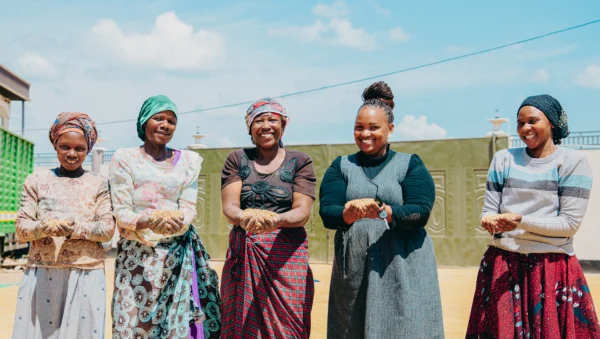
How people are photographed matters. Images made with consent, context, and dignity represent communities as participants in their own change rather than as illustrations of need.
Planning for it early
The most useful visual content is planned alongside the programme, not requested at the end of it.
That means agreeing early on what needs to be captured, when in the cycle it should happen, who gives consent and how, and where the files will live afterwards. It also means budgeting for it as a line item rather than finding money for it late.
Programmes that treat visual content as part of implementation end up with material they can use for reporting, fundraising, advocacy, and learning. Programmes that treat it as an afterthought usually end up with a folder of event photographs and very little else.